

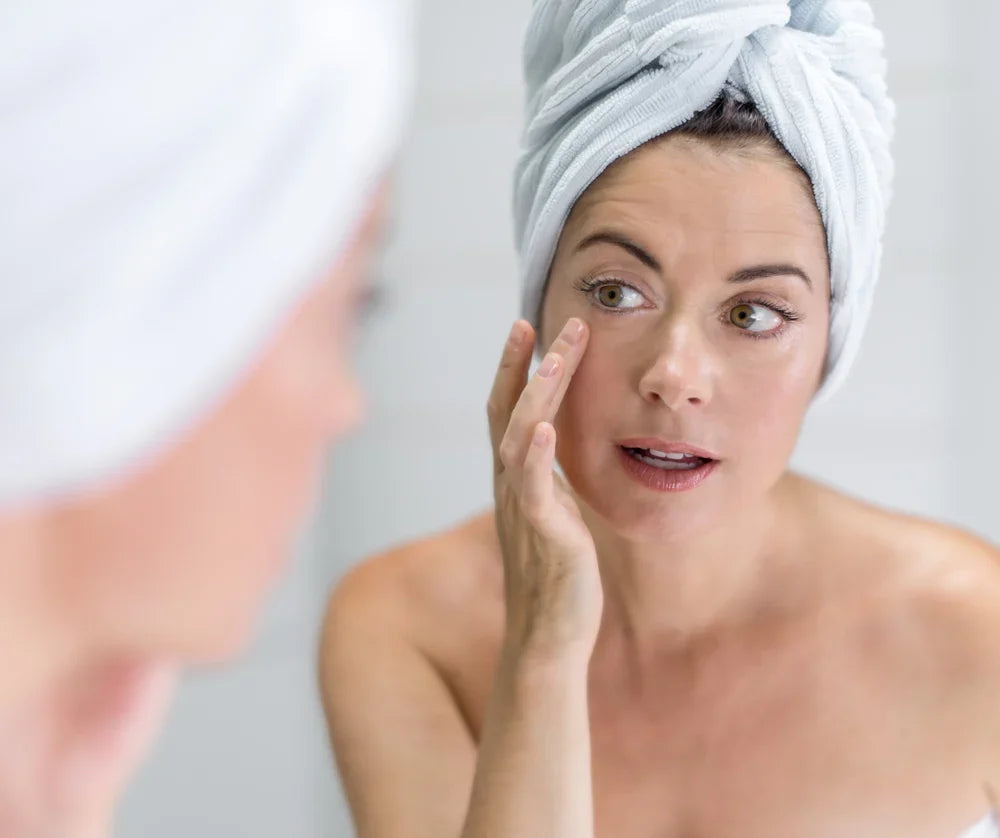
The skin around the eyes is thinner and more delicate than anywhere else on the face—which is why it's often the first area to show signs of aging. Eye creams are formulated specifically for this zone, with textures and ingredient concentrations suited to the periorbital area where a standard moisturizer or serum may be too heavy or too active.
Here's what you need to know to choose and use one effectively.
What Eye Cream Can Address
A well-formulated eye cream can help with:
- Fine lines and crow's feet
- Dark circles and under-eye discoloration
- Puffiness and fluid retention
- Sagging or loss of firmness around the eye area
- Dryness and dehydration
- Environmental aging from UV exposure and pollution
Most eye creams are designed to address multiple concerns simultaneously—so if you're dealing with more than one, a single well-chosen product can often cover all of them.
When to Start Using Eye Cream
Earlier than most people think. For younger skin, an eye cream serves as a preventative measure—supporting hydration and protecting against the early formation of fine lines before they become established. For those already seeing signs of aging around the eyes, a targeted formula can help reduce their appearance over time.
There's no age that's too early or too late to start. If you're not using one yet, now is the right time.
Key Ingredients to Look For
The ingredients in your eye cream determine what it can actually do. Here's what the evidence supports:
- Retinol — Boosts cell turnover and stimulates collagen production. One of the most effective ingredients for reducing fine lines and crow's feet.
- Peptides — Amino acid chains that signal the skin to produce more collagen and elastin, supporting firmness and flexibility over time.
- Vitamin C — Brightens dark circles, improves texture, and provides antioxidant protection against UV and pollution damage.
- Exosomes — Cellular messengers that support skin repair and regeneration—a newer but well-supported technology for skin renewal.
- Caffeine — Helps constrict blood vessels and reduce puffiness and the appearance of dark circles.
- Hyaluronic acid — Draws moisture into the skin and maintains hydration, keeping the under-eye area plump and smooth.
- Ceramides — Support the skin barrier around the eyes, preventing moisture loss and reducing sensitivity.
Choosing the Right Eye Cream for Your Concern
Fine Lines and Crow's Feet
Best ingredients: Retinol, peptides, vitamin C
Revision Skincare D·E·J Eye Cream — A comprehensive anti-aging eye cream combining peptides, antioxidants, and skin-renewing ingredients to visibly reduce fine lines and improve the overall appearance of the eye area.
Dark Circles
Best ingredients: Vitamin C, peptides, brightening actives
SkinMedica Instant Bright Eye Cream — Formulated to immediately brighten and visibly reduce the appearance of dark circles, with a blend of light-diffusing ingredients and skin-tone-evening actives for both instant and cumulative results.
Puffiness
Best ingredients: Exosomes, peptides, caffeine, hyaluronic acid
Plated Eye Serum — Applies Plated's exosome technology to the delicate eye area, supporting cellular repair and reducing the appearance of puffiness and fine lines with a lightweight, fast-absorbing formula.
Sagging and Loss of Firmness
Best ingredients: Peptides, retinol, lifting actives
Pavise Precision Eye Lift — Targets the eye area with a firming formula designed to lift, tighten, and reduce the appearance of sagging skin and fine lines around the eyes.
Dryness and Dehydration
Best ingredients: Hyaluronic acid, ceramides, peptides
SkinCeuticals A.G.E. Advanced Eye — A rich, targeted eye cream formulated with proxylane, blueberry extract, and flavonoids to address the multiple signs of aging around the eyes—including dryness, crepiness, dark circles, and loss of firmness. A strong all-around option for mature or dry eye-area skin.
Fine Lines with Retinal Technology
Best ingredients: Retinal (retinaldehyde), peptides
ISDIN Retinal Eyes — Uses retinaldehyde—a more potent and faster-converting form of vitamin A than retinol—in a formula specifically designed for the periorbital area. A strong option for those who want retinoid-level results with a formula calibrated for the delicate eye zone.
How to Apply Eye Cream
Application technique matters as much as the product itself. The skin around the eyes is thin and easily damaged by repeated pulling or tugging—which can actually accelerate the formation of fine lines over time.
- Use a small amount. A pea-sized amount is typically enough for both eyes. Using too much can cause the product to migrate toward the eyes and cause irritation.
- Apply with your ring finger. It naturally applies the least pressure of any finger, making it ideal for the delicate eye area.
- Tap, don't rub. Gently tap or pat the product along the orbital bone—from the inner corner outward—until absorbed. Avoid dragging or rubbing.
- Apply in the right order. Eye cream generally goes on after serums and before your regular moisturizer, following the lightest-to-heaviest layering principle.
- Follow product instructions for frequency. Some formulas are designed for once-daily use, others for AM and PM. Consistency matters more than frequency.
The Bottom Line
Eye cream is one of the more targeted investments you can make in your skincare routine—and one of the easier ones to get right once you know what to look for. Choose a formula matched to your primary concern, apply it consistently with a gentle technique, and give it at least 8–12 weeks to show results.
Shop our full eye care collection at ShopMDSkincare.com.


